Summer Between Junior and Senior Year
Junior year’s finished and summer’s almost here! 🙌 This summer, however, probably feels a bit different. With senior year on the horizon, you may be starting to dread the upcoming college application process. But this isn’t the time to worry—it’s the time to prepare!
This summer is often seen as the capstone of your extracurricular experiences throughout high school. Yep, college applications are a core component of it, but more than that you should be focused on making an impact in your chosen passion, whether that’s music, research, athletics, volunteering, interning, or anything else. So, in addition to planning for college apps, you also need to invest your time into something that will showcase who you are and what you can offer to the world.
Extracurriculars
Let’s start with your extracurriculars (ECs), and why they’re so important. As you probably know, college admissions are about as difficult as they’ve ever been. In part, this is simply due to applications being easier to apply to and more students trying to go to college than in past years (thanks to population growth). As a result, admissions have become increasingly more competitive.
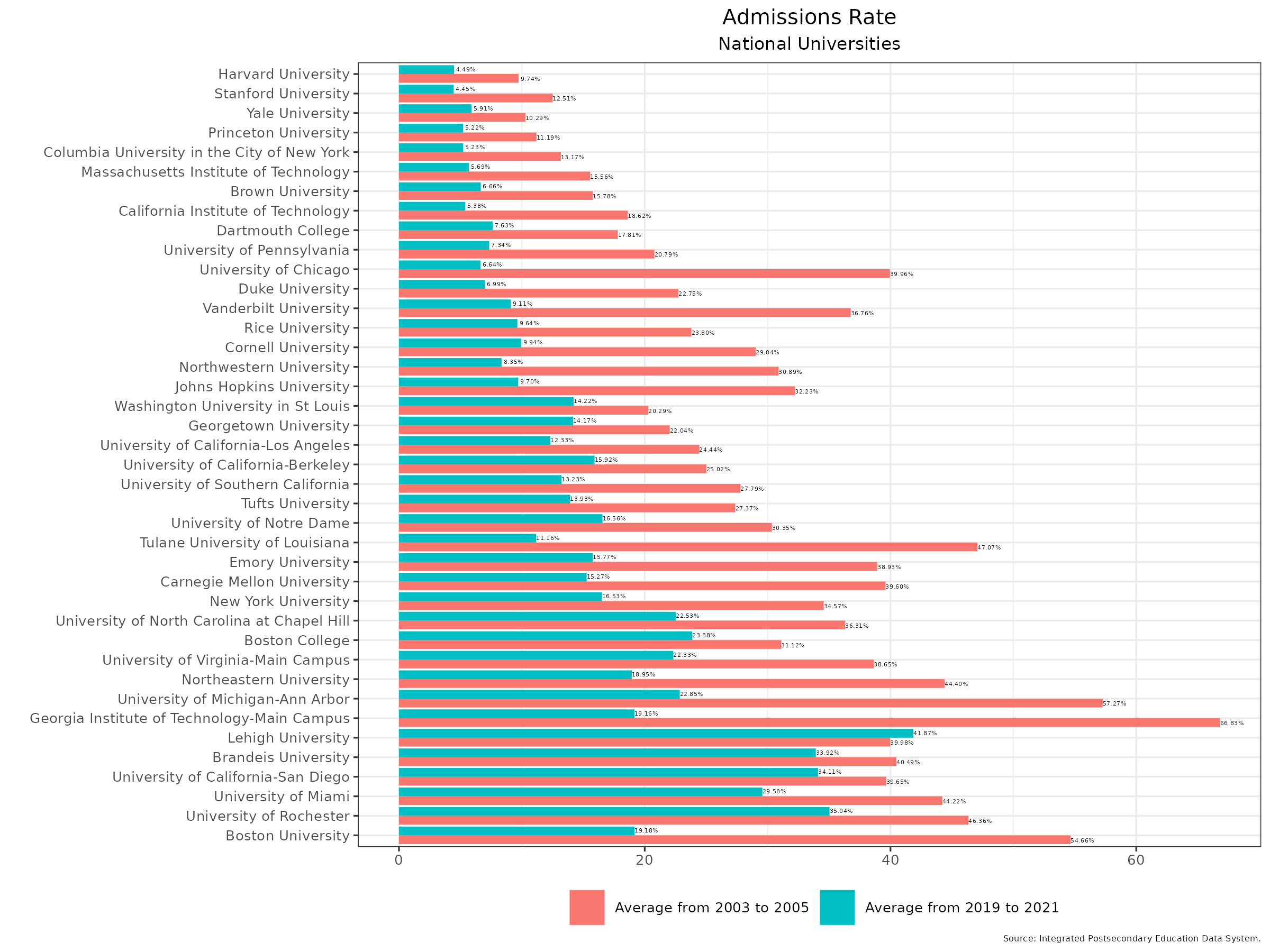
Say 15 years ago, a 3.85 GPA and 1450 SAT and random assortment of activities might have been enough to gain admission into a top 20 school, but that's no longer the case. Nowadays, the GPA, SAT, and difficult class schedule are all expected. It’s not a differentiator any longer—it’s a baseline. Having strong academics is what makes you eligible for selection, but not what sets you apart from the pack. Today, what you need is something more: you need to distinguish yourself through your extracurriculars and your passions.
❓ How? Well, ideally throughout the past few years, you’ve been working diligently in your academics, but also honing some sort of EC. These ECs are really what help admissions officers make sense of who you are and what you care about. It doesn’t matter whether you're a violinist, a stop motion animator, a basketball player, or a Civil War re-enactor, or something else entirely. What matters is that you commit to it.
You want to emphasize that not only do you care about these passions, but you also take them seriously, going out of your way to push yourself and invest in them. And now with senior year approaching, this is your last summer to show just how far you’ve progressed since freshman year and how much you’ve learned and invested.
For some students, this may be conducting a PhD-advised research paper for publication. For others, it could be creating an iOS or Android application that’s downloadable from the App Store or Google Play. It could be writing your own orchestral composition. Or it could be setting up a new volunteer project or program in your community. Of course, these are just examples of things that people could do—everyone is different in terms of what they both want to do and feasibly can do.
🩺 EXAMPLE: If you’re interested in medicine, you obviously can’t practice medicine (yet!), but you could shadow doctors, volunteer at a hospital or care facility, work as a Certified Nursing Assistant, or something similar. But depending on your personal circumstances, you may not have access to these types of activities, and that’s okay. Instead, you’ll want to find another way to highlight your strengths and the extent you’re willing to go to in order to challenge yourself and contribute to your community. Demonstrating your ability to push yourself doesn’t have to be limited by where you live or where you go to school.
Standardized Testing (SAT/ACT)
The other big thing this summer, naturally, is getting ready for the college applications themselves. If you’re doing standardized testing, the first thing is making sure your ACT or SAT is ready to go. If you haven’t taken it yet or aren’t satisfied with your score, this is the time to really study and get ready. As the next step, we recommend identifying your target score: for the schools you’re applying to, see how far you’re off from the average score of their accepted applicants. And if you haven’t yet, take a free practice test to calibrate! College Board offers SAT tests and ACT.org offers ACT tests.
💡 TIP: For your most “accurate” score, take your practice test under test-taking conditions. Just like the real test, take it in the early morning, in one sitting with the built-in breaks, and in a quiet room with no distractions (that’s right, you’ll need to put your phone away).
Next, make sure you look up the test dates—they vary year-to-year, but pretty much always offer an August, September, and October date. We suggest shooting for August or September since you’ll have less schoolwork to worry about (compared to later dates), and can focus more on test prep.
Your College List
Beyond standardized testing, the next thing you should aim to do is get your college list finalized as early as possible, ideally before August at the latest. This includes things like identifying your safety, target, reach (or super reach) schools, as well as figuring out your strategy for early applications (whether to apply early action, early decision, restrictive early action, etc.). Additionally, you should be thinking about if you plan to apply for scholarships, either independently or directly through the schools.
❓ Why are you doing all this early on? So you can create a schedule. This is the most important thing you can do for yourself to help you manage stress during senior year. Having a clear, organized schedule takes out all the guesswork. Whether you’re writing your essays, editing your application, or finally clicking “Submit”, you’ll know what to do and when to do it—all without worrying if you’ll get everything done on time.
At Eritus, we recommend working on roughly 1 school per week starting in the beginning of August, which gives you enough time for about 20-22 schools (unique applications) at that cadence. In our experience, students feel less stress this way and also get buffer time for those super busy weeks or unexpected colds.
Application Essays
Once you’ve crafted your college list, finalized your SAT/ACT plan, and set up your summer EC project/program, you can finally focus on the essay portions of your applications. The college app essays are infamous because they’re both a lot of work and an incredibly important component of your application. They’re the one place where you get to talk in your voice, highlight things that maybe aren’t otherwise apparent on your application, and help put a personality to your name. In other words, it’s where you can truly differentiate yourself from a statistic and emphasize your individuality.
When it comes to the essays, we recommend doing 2-4 brainstorming sessions where you figure out the most important things to you, or the most defining things that have happened to you. They don’t always have to be related to academics (like a major-focused essay), or even your extracurriculars. They can be about life experiences and learning lessons, like moving across the country year-after-year, battling with mental health struggles, or putting your friends first and going out of your way for their happiness. Of course, you can talk about your ECs as well, which students often do, but try not to limit yourself to your activities—think more broadly about what you do and why you do it, but also the things that define you.
To Recap:
Once you’ve done all this, you’ll be pretty solid for the upcoming semester and ready to tackle the college app process! We’ll dive deeper into the essays and application process in another post, but the takeaway here is:
Spend the summer after junior year working on something that makes an impact; challenge yourself within your chosen passion(s) and highlight it.
Finalize your SAT/ACT plans.
Complete your college list.
Create a week-by-week schedule to follow for each and every activity you’ll need to do.
Brainstorm the essays, decide on what you want to highlight in your application, and once the Common App opens in August… start writing!